making of
A making-of retrospective details how Virgil Widrich folded 65,000 printed frames into Fast Film's paper sets
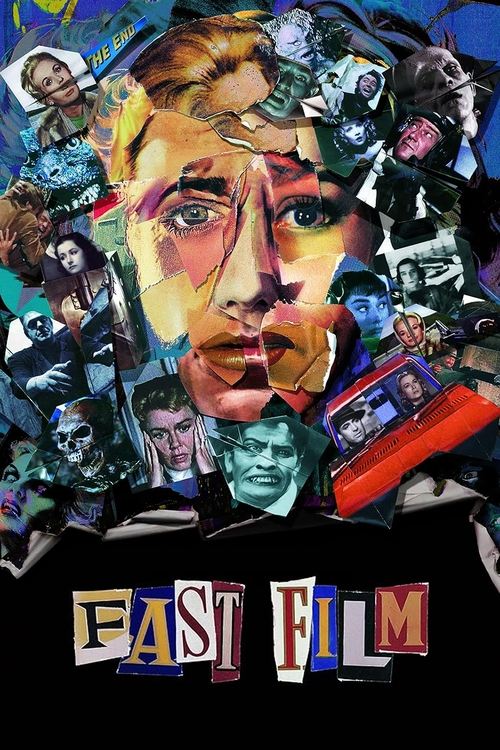
Animation World Network's 'Tearing up the Tracks: Virgil Widrich's Fast Film' documents the making of Widrich's 2003 short, built from more than 65,000 individual paper printouts of frames digitised from over 400 classic live-action films -- Psycho, North by Northwest, Raiders of the Lost Ark and the Bond series among them. Widrich's small Vienna crew spent roughly two and a half years on the film, close to a year of that folding printed frames into three-dimensional paper objects by hand: a still of John Wayne as a fighter pilot folded into a paper aeroplane, printed frames folded into train carriages for a crash sequence built from around thirty separate paper-object layers. Each folded construction was photographed as a still on a Canon EOS D30 digital camera, tracked through an extensive shot database Widrich kept of titles, keywords and image descriptions, then sequenced and composited in Adobe After Effects into a single flowing camera move through paper architecture.
For the database, the durable fact is the technique itself -- three-dimensional paper construction, photographed and composited rather than incrementally re-posed, sitting on the boundary between papercraft and cutout animation. Folded into the Wiki as papercraft-animation, a new concept page distinguishing built three-dimensional paper work (Fast Film; Jamie Caliri's commercial and title-sequence papercraft) from flat, under-camera cutout animation such as Yuri Norstein's layered work.
▶ Video
Fast Film — Fast Film (full film — official — Virgil Widrich) Plays on YouTube Open in Watch player Creator / source
Every view stays on the authorized channel and supports the makers.
Films & works (1)
Sources
Listed so you can verify every claim. Animation World Network
Suggest an edit
See something wrong or missing in this story? Edit the fields below or describe the correction in your own words. Everything is optional, and every change is reviewed against a source before publishing.