making of
Inside Pinocchio's cinematography: lens-matching, dust-safe DSLRs, and switching to on-ones to beat strobing
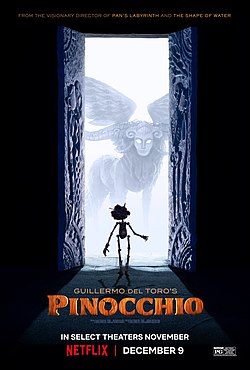
Befores & Afters' account of cinematography on Guillermo del Toro's Pinocchio (2022) quotes director of photography Frank Passingham on the shot-level camera choices behind the film's look. Passingham shot on Canon 5D DSLRs rather than mirrorless bodies to avoid dust contamination over shoots that could run three weeks per setup, and matched del Toro's live-action focal-length preferences (28-85mm) to stop-motion's smaller sets by mixing Laowa macro lenses for wider coverage, Nikon glass for general work, and Zeiss lenses for close-focus 25mm macro shots -- close enough in rendering, he says, that "you really couldn't spot any difference" between a shot finished on a different lens brand than it started on.
The article also names the production's motion-control scale -- three dedicated mo-co operators running 34 separate motion-control units across the shoot -- and a specific exposure-interval decision: animators switched from animating on twos to animating on ones for lateral camera-tracking shots at 4K resolution, because the coarser two-frame hold produced visible strobing once the camera itself was also moving.
Folded into the Wiki's newly-expanded capture-technique page as a sourced, concrete example of both the on-ones/on-twos decision being made per shot rather than fixed for a whole production, and of motion control operating at feature scale.
▶ Video
Guillermo del Toro's Pinocchio — Official teaser trailer Plays on YouTube Open in Watch player Creator / source
Every view stays on the authorized channel and supports the makers.
Films & works (1)
People
Sources
Listed so you can verify every claim. Befores & Afters
Suggest an edit
See something wrong or missing in this story? Edit the fields below or describe the correction in your own words. Everything is optional, and every change is reviewed against a source before publishing.