interview
Aardman on lighting, "thumbiness" and Gaussian-splat sets for Shaun the Sheep: The Beast of Mossy Bottom
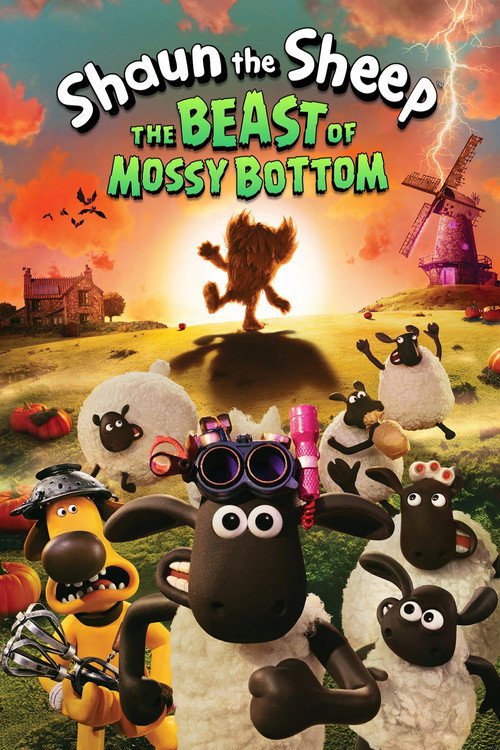
Ahead of its September 18, 2026 theatrical release, two interviews laid out how Aardman built its third Shaun the Sheep feature -- and how the studio thinks about craft versus digital tools going into its 50th-anniversary year. Art director Andy Brown told Animation Scoop the Halloween-set film uses full primary and secondary colour for the first time in the series, largely through lighting rather than new set builds (even the familiar farmhouse hallway "took on a whole new life" under red and green light), and moves past the earlier films' fixed summer-midday look into dawn, dusk and autumn lighting. Separately, chief creative director/executive producer Sarah Cox, managing director Sean Clarke and cofounder Sir Peter Lord told Shortlist that Aardman's animators call their visible, hand-made imperfection "thumbiness" -- "the visible humanity in our work," per Clarke, "you can see the hand of the maker, sometimes literally in the fingerprints in the clay." Cox said Beast's puppets are built from a kit of parts in wool, clay, silicone and textiles, with the most expressive facial moments individually hand-sculpted in clay, and that animating the shaggy title creature across ten identical puppet multiples was the production's hardest fabrication problem ("a lot of hairspray was used"). Both interviews independently confirm the same production shortcut: Gaussian splat scans of built environments let the crew reuse locations as background plates within a smaller physical footprint, helping the feature come together in roughly eight months. On generative AI specifically, Cox was direct: "We don't use generative AI in our films. There would be no point... the magic is in the handcrafted approach," while Clarke pointed to VR headsets for pre-production set modelling and simulation software for weather, fire and crowds -- shown at the studio's current Young V&A exhibition -- as the kind of digital tool Aardman does embrace, always "in service to the stop frame world and puppets" rather than replacing it. Update (Sept 16-17, 2026): two further pieces add production specifics without repeating the craft facts above. Co-directors Steve Cox and Matthew Walker described the film's horror-pastiche mood board to Mama's Geeky — Universal's 1931 Frankenstein (the windmill), Nosferatu's shadows, Carry On Screaming and Scooby-Doo — and the tonal rule they used to keep a monster movie family-friendly: "Whenever we have a scary moment, we always have a comedy moment afterwards" (Cox). SlashFilm's set-visit report adds that the title monster's mid-film transformation was achieved with practical puppets built with fur rather than as a digital effect, a choice the filmmakers linked to the transformation scene in An American Werewolf in London; the film's lightning was hand-drawn rather than digitally generated, and the production's only digital-effects work was on clouds and water, deliberately built to read as practical rather than as an obvious CG addition.
▶ Video
Shaun the Sheep: The Beast of Mossy Bottom — Shaun the Sheep The Beast of Mossy Bottom - Official Trailer Plays on YouTube Open in Watch player Creator / source
Every view stays on the authorized channel and supports the makers.
Films & works (1)
People
Studios
Sources
Listed so you can verify every claim. Animation Scoop · Shortlist · Mama's Geeky · SlashFilm
Suggest an edit
See something wrong or missing in this story? Edit the fields below or describe the correction in your own words. Everything is optional, and every change is reviewed against a source before publishing.